

Seeing Red (Pt. 2)
Don’t tread on me

If the virtues associated with the colour red in fairytale after fairytale include life force, ambition, courage and a sense of adventure, then “the flip side of the red,” according to Christian mythologist Martin Shaw, can be characterized by “self-obsession, arrogance, aggression [and] a distinct lack of care for others.” In a phrase: “Don’t tread on me.”1 This slogan is also known for appearing underneath a rattlesnake on the famous Gadsden Flag.

Designed in 1775 by Colonel Christopher Gadsden, the flag was a defining artifact of the American revolution. Similarly to Benjamin Franklin and other contemporaries of his, Gadsden was drawn to the image of a rattlesnake because rattlesnakes only strike when they have been provoked—much like the American colonies vowed to do against anyone who dared threaten their freedom.2
Two-and-a-half centuries later, the spirit of the rattlesnake still encompasses much of what it means to be an American.3

Although I grew up in Rwanda and now live in Canada, my own love of freedom has at times led me to jokingly refer to myself as spiritually American. I am reminded of a session I attended during staff training week at my old summer gig with the Salvation Army. The purpose of the session was for me and my coworkers to discern which values we held most dearly in our respective lives.
We were each handed a list that contained dozens of words — words like faith, family, fun, success — from which we then had to pick the two that most resonated with us. After scanning my list for 5-10 minutes, I finally circled my top two: freedom and truth. To this day, I don’t think there are many things I care more about than those two concepts. Because without truth, everything is meaningless. And without freedom, I am nothing. My life happens to me, and I am powerless over it.
“And you will know the truth, and the truth will make you free.” — John 8:32 NRSV
Jesus seemed to understand the importance of freedom and truth. Not only did He understand their importance as separate entities, but He also understood that real freedom is contingent upon truth. For if mankind is born into a state of slavery to sin as He argues in John 8:344, then freedom must be a by-product of submitting to the truth of God’s word.
This is why secular conceptions of freedom can so easily run counter to freedom as understood in Holy Scripture. Modern western culture tells us that we become free whenever we are unshackled from constraints, limits and restrictions. You do not have to be gay or trans to find this proposition attractive.
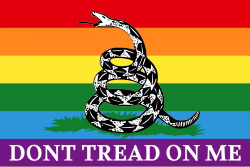
I, for one, hate being told what to do every bit as much as the next he, she or they. My closest family and friends can testify to that effect. And when “pro-choice” protesters scream “My Body, My Choice,” I understand why they are so angry—my opposition to abortion notwithstanding. Maybe that’s why I relate to Simba’s “I Just Can’t Wait to Be King” so much.
[YOUNG SIMBA]
No one sayin’, “Do this”
[YOUNG NALA]
No one sayin’, “Be there”
[YOUNG SIMBA]
No one sayin’, “Stop that”
[YOUNG SIMBA & YOUNG NALA]
No one sayin’, “See here”
[YOUNG SIMBA]
Free to run around all day
Free to do it all my way
This might as well be the anthem for libertarians and freedom lovers the world over. But it is not a Christian anthem. Not even close.
Father Chad: Living Free

My pastor preached a sermon called “Living Free” four weeks ago in which he contrasted freedom according to the West (what he termed “self-form freedom”) with freedom according to Jesus (i.e., “Christoform freedom”).
Self-form freedom, according to Fr. Chad, is “ultimately an issue of lordship—it’s wanting to live apart from any Lord but me.” Towards the end of his message, he added that while straying sheep are in a sense “free” from their shepherd, “it’s a self-form freedom that in the end is really no freedom at all.” Nevertheless, these sheep will “often use the language of freedom.”
As tuff5 as Barry Goldwater’s headline quote from the 1964 Republican National Convention was, for instance, extremism in the defense of liberty can most certainly be a vice.
Christoform freedom, on the other hand, is an entirely different affair. It is “not about a disconnect or an autonomy but about a unity, about a communion [with Christ].” As Kristin Maguire underscored in my comment section two months ago, “Jesus calls us to fully realize our uniqueness in him.”
Our freedom in Him is never an end in itself, however. Service is its endgame. To quote the prayer book’s Collect for Peace, “to know [God] is eternal life and to serve [Him] is perfect freedom.”
Mama Mugz: Living Crucified

I may be biased, but I am hard-pressed to think of anyone who embodies the self-sacrificial posture of service to God and neighbour we are all called to better than my own mother. For years, I have watched her pray prayers which directly contradict what her agenda would be if self-concern were anywhere close to a priority of hers. I texted her about a month ago to challenge her on such a prayer. She sent me a voice note which put me right back in my place.
For those of you who only speak one or two of the four languages featured in this 60-second excerpt, she began by reminding me that God is sovereign and that we must submit to His will for our lives. Submission to God’s lordship is, after all, a core component of what it means to be a Christian.
She then referenced both Romans 12:16 and Galatians 2:207 as she reminded me that she exists as a living sacrifice to her God and that, when a person becomes a Christian, they no longer live for their own sake but rather for Christ. Pleasing God, therefore, is all she cares about. And if it means disregarding her own preferences when they conflict with God’s perfect will, then so be it.
“I think none of what I’ve just said is news to you,” she casually said towards the end of her note.
She was technically right, but her words still hit me like a truck. They echoed the end of Kristin Maguire’s aforementioned contribution to my comment section. Referring to God’s radical invitation to every Christian, Maguire wrote:
It is bold. It is emptying oneself out to be filled to overflowing. It is losing one’s life to find it. It is the way of the Cross.
This calling to die is incomprehensible to those of us who are still chasing self-form freedom. But for those of us who seek to embody the Christoform freedom Christ died to offer us, death to self is good news. It means we can finally live unto God.
The Rattlesnake vs. The Christian
While the rattlesnake concerns itself with its own business, the Christian concerns himself with the business of God’s Kingdom. And when the rattlesnake hisses “don’t tread on me,” it does not have service in mind. It is up to no good. When the Christian declares those words, however, he is addressing the sin from which Christ died to set him free.
“For freedom Christ has set us free. Stand firm, therefore, and do not submit again to a yoke of slavery.” — Galatians 5:1
He wants freedom from sin, so that he might become unshackled in his pursuit of God’s kingdom and righteousness.
I want that freedom too.
Martin Shaw wrote in chapter three of Liturgies of the Wild that, “with mentoring, someone in the red can really get things done for the good.” He added that “they kick ass once they cop on to the notion of service.”
This is why I am grateful for my mom, my pastor and every other voice which has helped shape my don’t-tread-on-me impulses for the better. Their wisdom inspires me to kick ass to the glory of God.

Martin Shaw, Liturgies of the Wild: Myths That Make Us, narrated by Martin Shaw (Penguin Audio, 2026), audiobook.
Kristin Holtshouser, “Don’t Tread On Me Flag – Origins and Significance,” AmericanFlags.com, May 29, 2024.
I myself am not an American, so let me know if I’m way off base.
“Very truly, I tell you, everyone who commits sin is a slave to sin.”
Coined by S.E. Hinton in The Outsiders, “tuff means cool, sharp—like a tuff-looking Mustang or a tuff record” (pg. 12).
“I appeal to you therefore, brothers and sisters, on the basis of God’s mercy, to present your bodies as a living sacrifice, holy and acceptable to God, which is your reasonable act of worship.”
“And it is no longer I who live, but it is Christ who lives in me. And the life I now live in the flesh I live by the faith of the Son of God, who loved me and gave himself for me.”
This is amazing Sacha. I never thought about the “don’t tread on me” phrase like that.
I loved how you defined the secular definition of freedom and contrasted it with Christ’s definition, because while the two can seem similar at times, they’re definitely contradictory.
How richly God poured out His blessings upon you to place you in your mother's womb and for her to nurture and teach you!
There is no greater freedom than being a bond-servant in God's household. Paul wrote eloquently about true freedom in Christ rather than the false freedom offered by the world:
"For the love of Christ controls us, having concluded this, that one died for all, therefore all died; and He died for all, so that they who live might no longer live for themselves, but for Him who died and rose again on their behalf." 2 Corinthians 5:14-15 NASB95
CS Lewis' imagery from chapter 11 of "The Great Divorce" comes to mind. I highly recommend reading the whole, but especially this chapter.